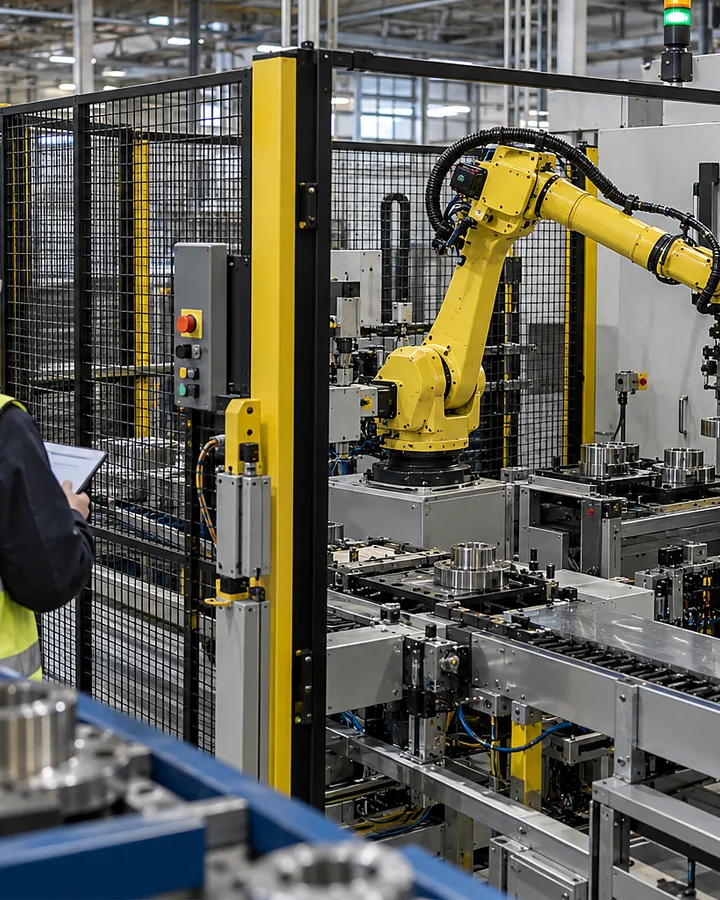
Robot arm above a tray of metal components beside a bowl feeder and conveyors.
Industrial automation and robotics

Glass Handling Robots

Define how your glass products arrive, how they must be handled and where they need to go. Review product variation, tooling, cycle requirements and recovery with representative examples before selecting a robotic handling concept.

Speak directly with Oxford Industrial Automation about robotic handling of glass products.

Quick answer

How do we handle glass robotically without unacceptable damage?

Provide glass sizes, weights, coatings and permitted grip areas, together with the transfer path. Trial representative pieces for secure pickup, placement accuracy and surface condition. Include damaged or missing items, interrupted transfers and access for recovery when assessing the tooling and complete cell arrangement.

Robot arm above a tray of metal components beside a bowl feeder and conveyors.
Two people beside robot tooling, fixtures and an open control cabinet.
Six useful questions

Describe what you need from glass handling robots before choosing a solution

For repeatable production using robotic handling of glass products, share the normal condition, realistic range and difficult cases the finished system must handle.

Question 1

Part, Product and Process Variation for Robotic Handling of Glass Products

For your initial enquiry about glass handling robots, describe the current position, required outcome, acceptable limits and known exceptions for part, product and process variation for robotic handling of glass products. That lets us compare options against your real production rather than one nominal value.

Question 2

Arrival Pattern and Presentation

For your initial enquiry about glass handling robots, describe the current position, required outcome, acceptable limits and known exceptions for arrival pattern and presentation. That lets us compare options against your real production rather than one nominal value.

Question 3

Required Cycle and Production Pattern

For your initial enquiry about glass handling robots, describe the current position, required outcome, acceptable limits and known exceptions for required cycle and production pattern. That lets us compare options against your real production rather than one nominal value.

Question 4

Tooling, Sensing and Process Interfaces

For your initial enquiry about glass handling robots, describe the current position, required outcome, acceptable limits and known exceptions for tooling, sensing and process interfaces. That lets us compare options against your real production rather than one nominal value.

Question 5

Operator Access, Recovery and Changeover

For your initial enquiry about glass handling robots, describe the current position, required outcome, acceptable limits and known exceptions for operator access, recovery and changeover. That lets us compare options against your real production rather than one nominal value.

Question 6

Run-Off Criteria and Production Evidence

For your initial enquiry about glass handling robots, describe the current position, required outcome, acceptable limits and known exceptions for run-off criteria and production evidence. That lets us compare options against your real production rather than one nominal value.
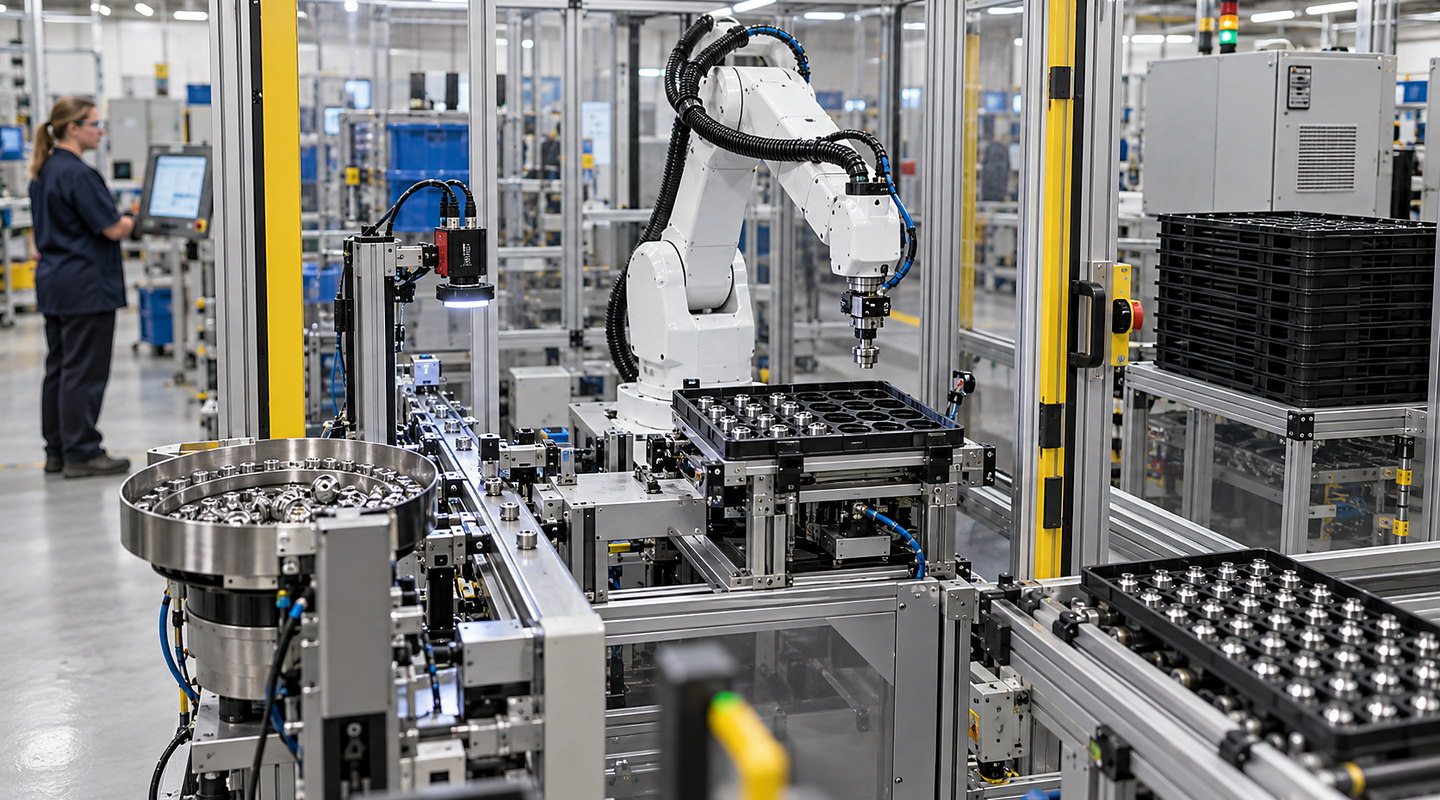
Applications

Two useful starting points for glass handling robots

The right choice changes with part, product and process variation for robotic handling of glass products, arrival pattern and presentation, your line layout and required results.

What happens next

Your route from an initial enquiry to a working solution

You can review decisions about operator access, recovery and changeover and run-off criteria and production evidence at each stage.

  1. 01

    Observe the Current Process and Collect Representative Samples

    Share representative parts, process observations and cycle data, including the normal range for part, product and process variation for robotic handling of glass products and the difficult arrival pattern and presentation cases.

  2. 02

    Prove Handling and Process Risks in a Focused Feasibility Trial

    Compare suitable methods and use focused trials to show how each option performs against required cycle and production pattern.

  3. 03

    Design and Build the Complete Guarded Cell

    Connect the equipment to your line, services and controls while resolving tooling, sensing and process interfaces for day-to-day operation.

  4. 04

    Run Agreed Scenarios and Support Production Ramp-Up

    Confirm operator access, recovery and changeover, then complete and record run-off criteria and production evidence before your operating team takes over.

Important limits

Know what needs a separate check

Your final solution for robotic handling of glass products must reflect the law, current standards and site-specific risks that apply to your installation.